
Stock #5 | Sept ’24 | (DELL)
Understanding Dell Technologies: A Leader in Innovation and Enterprise Solutions
By Zachary Gedal | 9-minute read
Discussion of Dell Technologies
We’re excited to introduce Dell Technologies Inc. (DELL) as our August stock selection. This addition aligns with our strategic focus on the technology sector and its potential for growth and stability. Dell’s strong presence in enterprise solutions and its recent positive performance make it a compelling addition to our diversified portfolio.
Table of Contents
- Introduction
- Brief overview of Dell Technologies as a company.
- Its critical role in the IT industry and impact on global technology solutions.
2. History and Evolution
- Founding by Michael Dell in 1984.
- Key milestones: From direct-sales PCs to a comprehensive provider of enterprise solutions.
3. Product Portfolio and Innovations
- Hardware: Exploration of Dell’s extensive range of personal computers, servers, and networking products.
- Software and Services: Deep dive into Dell’s software solutions, including security and data management, and cloud-based services.
- Strategic Acquisitions: Impact of major acquisitions like EMC, VMware, and others on Dell’s market position and capabilities.
4. Business Strategies
- Customer-Centric Approach: Analysis of Dell’s direct sales model and its evolution to embrace a broader market strategy.
- Innovation and R&D: Dell’s investment in research and development to stay at the forefront of technological advancements.
- Global Expansion: Dell’s strategies for penetrating emerging markets and strengthening its global presence.
5. Market Position and Competitive Landscape
- Current market positioning and financial health.
- Competitive analysis, including comparisons with other tech giants like HP, Lenovo, and Apple.
- Challenges and opportunities in the rapidly evolving tech industry.
6. Financial Performance
- Review of recent financial results and growth metrics.
- Discussion on Dell’s stock performance and its impact on investor value.
7. Corporate Responsibility and Sustainability
- Dell’s commitment to environmental sustainability, including green technologies and sustainable operations.
- Corporate governance and ethical business practices.
8. Future Prospects
- Innovations in cloud computing, AI, and cybersecurity.
- Strategic plans for continued growth and expansion in the tech sector.
9. Conclusion
• Recap of Dell Technologies’ key strengths and areas for potential growth.
• Consideration of Dell’s place in investment portfolios.
10. Additional Insights
• Alienware: A Game-Changing Addition
• Epilogue: Insights from Michael Dell’s Latest Book
Introduction to Dell Technologies
Founded in 1984 by Michael Dell, Dell Technologies has grown from a dorm-room startup into a global powerhouse in the IT sector. Known initially for its direct-to-consumer sales of personal computers, Dell has significantly expanded its offerings to include a full range of enterprise solutions, including servers, storage devices, networking solutions, and a broad portfolio of software and services.
As we evaluate the potential inclusion of Dell Technologies in our investment portfolio, we are particularly impressed by its continuous innovation and strong presence in the enterprise solutions market. Dell’s commitment to research and development has kept it at the cutting edge of technology, particularly in areas like cloud computing and cybersecurity, which are critical for modern enterprises.
Dell’s robust financial performance and strategic acquisitions have further solidified its market position, making it a promising candidate for investment focused on growth and stability. The company’s ongoing efforts in sustainability and corporate responsibility also align with our investment values, emphasizing ethical practices and long-term environmental stewardship.
Overview of Dell Technologies
- A Global Tech Powerhouse: Dell Technologies is a multinational technology giant renowned for its diverse portfolio of hardware, software, and services.
- Market Leader: The company is a dominant player in the PC market, a major provider of servers, storage solutions, and networking equipment, and offers an expanding range of cloud computing and IT services.
- Customer-Centric: Dell is known for its direct-sales model, emphasizing customization and customer relationships. This has evolved into a broader approach, catering to businesses of all sizes and individual consumers.
Role and Influence in the IT Sector
Economic Impact: As a major employer and a key player in the global supply chain, Dell Technologies has a significant economic footprint.
Innovation Driver: Dell has consistently pushed the boundaries of technology, introducing innovative designs and solutions in both hardware and software.
Industry Trendsetter: The company’s strategic decisions and product launches often shape trends within the IT sector. For example, Dell’s early adoption of virtualization and its foray into cloud services influenced the direction of enterprise IT.
II. History and Evolution

Founding by Michael Dell
- The Dorm Room Startup: The Dell story is the quintessential entrepreneurial tale. In 1984, Michael Dell, a 19-year-old student at the University of Texas at Austin, began selling custom-built personal computers from his dorm room.
- Disruptive Model: Dell’s direct-sales approach, cutting out middlemen and offering PCs at competitive prices,quickly disrupted the established PC market.
Key Milestones
Dell Technologies: In 2016, Dell and EMC merged to form Dell Technologies, a comprehensive IT solutions provider with a focus on digital transformation, cloud computing, and emerging technologies like artificial intelligence and edge computing.
Going Public and Growing: Dell Computer Corporation went public in 1988, fueling rapid growth and expansion.
Product Diversification: Beyond PCs, Dell expanded into servers, storage systems, networking equipment,printers, and other peripherals.
Acquisitions and Expansion: Throughout the years, Dell has made strategic acquisitions (e.g., EMC Corporation) to broaden its capabilities and enter new markets.
III. Product Portfolio and Innovations
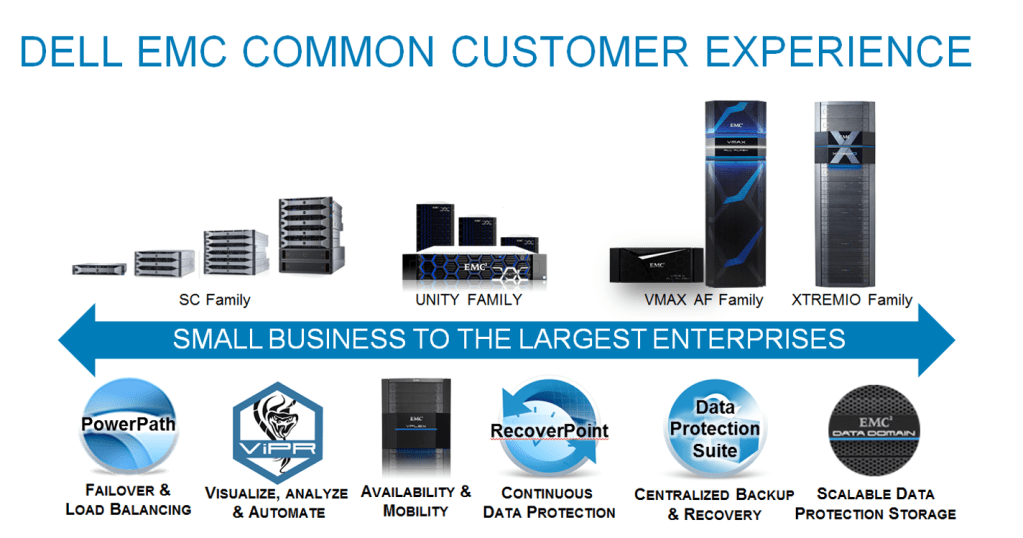
Dell Technologies offers an extensive range of hardware, software, and services, catering to both individual consumers and businesses of all sizes. The company’s product portfolio and innovations have played a pivotal role in its growth and market leadership.
Hardware:
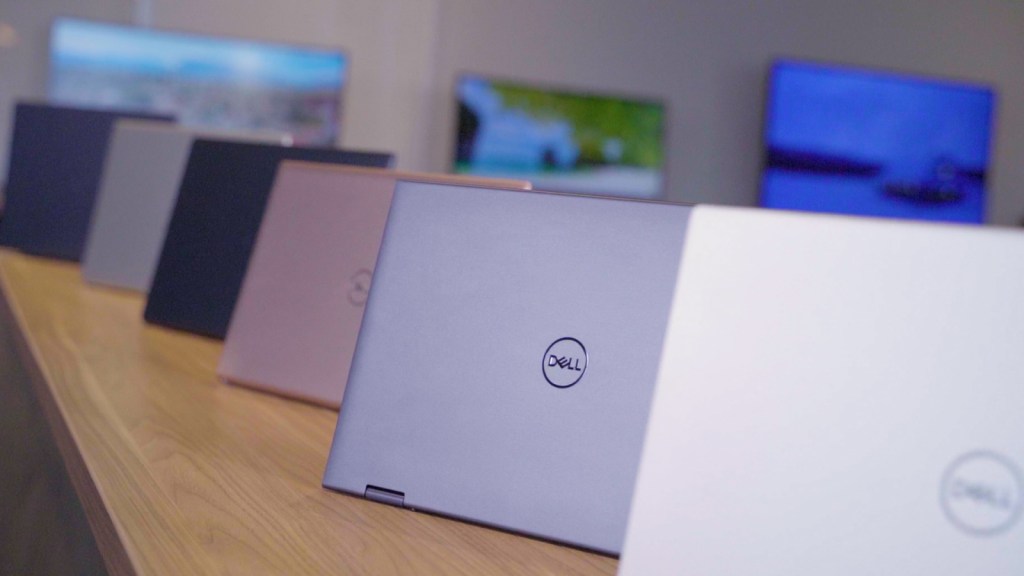
- Personal Computers (PCs): Dell is renowned for its diverse PC offerings, spanning from budget-friendly Inspiron laptops and desktops for everyday use to high-performance XPS models targeting professionals and creators. Additionally, the company caters to gamers with its Alienware line of gaming PCs and accessories.
- Servers: Dell’s PowerEdge servers are a cornerstone of many enterprise data centers. These servers are designed for scalability, performance, and reliability, and they support a wide range of workloads, from web hosting and databases to virtualization and cloud computing.
- Networking Products: Dell offers a comprehensive suite of networking solutions, including switches, routers, wireless access points, and network security appliances. These products cater to the needs of small businesses as well as large enterprises, enabling them to build and manage robust and secure networks.
Software and Services:
- Security Solutions: Dell Technologies prioritizes cybersecurity, offering a range of security software and services to protect against threats like malware, ransomware, and data breaches. Their solutions include endpoint protection, network security, identity and access management, and threat intelligence.
- Data Management: Dell’s data management portfolio includes software and hardware solutions for storing, protecting, and managing data. This includes data storage arrays, backup and recovery software, data deduplication appliances, and data management platforms for hybrid and multi-cloud environments.
- Cloud-Based Solutions: Dell Technologies has embraced cloud computing and offers a variety of cloud-based services, including infrastructure as a service (IaaS), platform as a service (PaaS), and software as a service (SaaS).Additionally, Dell provides consulting and managed services to help businesses migrate to the cloud and optimize their cloud environments.
Strategic Acquisitions:
- EMC Corporation: The 2016 acquisition of EMC Corporation was a landmark event for Dell Technologies. It significantly expanded the company’s capabilities in enterprise storage, data protection, and cloud computing, positioning Dell as a leader in the hybrid cloud market.
- VMware: Dell Technologies owns a majority stake in VMware, a leading provider of virtualization and cloud infrastructure software. This strategic relationship allows Dell to offer a comprehensive portfolio of virtualization and cloud solutions to its customers.
- Other Notable Acquisitions: Dell has made several other strategic acquisitions over the years, including SecureWorks (cybersecurity), Boomi (cloud integration), and Pivotal Software (cloud-native platform). These acquisitions have further strengthened Dell’s position in key technology areas and broadened its product and service offerings.
Overall, Dell Technologies’ focus on innovation, coupled with its strategic acquisitions, has enabled it to maintain its position as a global leader in the IT industry. The company’s comprehensive portfolio of hardware, software, and services, along with its commitment to security and data management, continues to meet the evolving needs of its customers in the digital age.
IV. Business Strategies

Dell Technologies’ success can be attributed to a combination of customer-centricity, innovation, and strategic global expansion. These key strategies have allowed the company to adapt to market demands, drive technological advancement,and maintain its competitive edge in the ever-evolving IT landscape.
Customer-Centric Approach:
- Direct Sales Model: Dell’s foundation was built upon a direct sales model, where customers could order customized PCs directly from the company, bypassing traditional retail channels. This allowed for greater flexibility, personalized service, and cost savings.
- Adaptation to Market Demands: While the direct sales model remains a core strength, Dell has adapted to changing market dynamics by expanding its distribution channels. Today, Dell products are available through various online and offline retailers, catering to a wider range of customers and preferences.
- Customer Focus: Dell places a strong emphasis on understanding and meeting customer needs. The company actively seeks customer feedback, conducts extensive market research, and invests in customer support and service to ensure satisfaction and loyalty.
Innovation and R&D:
- Commitment to Technological Advancement: Dell is committed to staying at the forefront of technology. The company invests heavily in research and development (R&D) to drive innovation in hardware, software, and services.
- New Product Development: Dell consistently introduces new products and solutions to meet the evolving needs of its customers. This includes advancements in PC design, server technology, storage solutions, networking equipment, and software offerings.
- Emerging Technologies: Dell actively explores and invests in emerging technologies like artificial intelligence,machine learning, edge computing, and 5G to identify potential opportunities and drive future growth.
Global Expansion:
- Penetrating Emerging Markets: Dell has identified emerging markets as a key growth area. The company has expanded its presence in countries like India, China, Brazil, and other regions with growing IT needs. This involves tailoring products and services to local market requirements and establishing strong partnerships with local distributors and resellers.
- Strengthening Global Presence: Dell’s global expansion strategy also focuses on strengthening its presence in established markets. This includes expanding sales and marketing efforts, investing in local infrastructure, and building strong relationships with customers and partners across different regions.
- Global Supply Chain: Dell has established a robust global supply chain to ensure efficient production, distribution,and delivery of its products and services worldwide. This involves managing complex logistics, ensuring quality control, and complying with local regulations and standards.
Overall, Dell Technologies’ business strategies have been instrumental in its success as a global technology leader. By prioritizing customer satisfaction, driving innovation, and expanding its reach globally, Dell has consistently adapted to market changes, maintained its competitive edge, and delivered value to its customers and stakeholders.
V. Market Position and Competitive Landscape

Dell Technologies holds a significant position in the global technology market, but it operates in a highly competitive landscape alongside other tech giants.
Analysis of Dell’s Current Market Positioning and Financial Health:
- Market Share: Dell consistently ranks among the top vendors in the global PC market, competing closely with HP and Lenovo. The company also holds a substantial market share in servers and storage solutions.
- Financial Performance: Dell Technologies demonstrates generally strong financial performance, with consistent revenue growth in recent years. However, the company’s profitability can be influenced by factors such as fluctuating component costs, currency exchange rates, and global economic conditions.
- Brand Recognition: Dell enjoys strong brand recognition and customer loyalty, particularly among businesses and IT professionals. The company’s reputation for quality, reliability, and customer service contributes to its market position.
Competitive Analysis:
| Dell Technologies | HP Inc. | Lenovo | Apple |
|---|---|---|---|
| Strengths: Diverse product portfolio, strong enterprise focus, direct sales model, customer service, supply chain management. | Strengths: Strong brand recognition, broad product range, retail presence, printing solutions, design innovation. | Strengths: Cost-effective PCs, strong presence in emerging markets, innovative product design, supply chain efficiency. | Strengths: Strong brand loyalty, premium products, ecosystem integration, design and user experience, innovation. |
| Weaknesses: Dependence on PC market, competition from cloud providers, potential margin pressure, integration challenges from acquisitions. | Weaknesses: Overdependence on PC market, competition from cloud providers, declining printer demand, brand perception. | Weaknesses: Less diversified product portfolio, brand perception in premium segments, challenges in enterprise market. | Weaknesses: High price points, limited product customization, closed ecosystem, less focus on enterprise solutions. |
Discussion of Challenges and Opportunities within the Tech Industry:
- Challenges:
- Intense Competition: Dell faces intense competition from established players like HP and Lenovo, as well as emerging rivals in the cloud computing and software space.
- Market Saturation: The PC market, a significant revenue source for Dell, is experiencing saturation and slower growth in some regions.
- Technological Disruption: Rapid technological advancements can disrupt existing markets and business models, requiring Dell to continuously adapt and innovate.
- Supply Chain Disruptions: Global events like the COVID-19 pandemic have exposed vulnerabilities in supply chains, impacting production and delivery timelines.
- Opportunities:
- Digital Transformation: The ongoing digital transformation of businesses presents a significant opportunity for Dell to provide solutions for cloud computing, data management, cybersecurity, and AI-powered technologies.
- Emerging Technologies: Dell can capitalize on emerging technologies like edge computing, 5G, and the Internet of Things (IoT) to develop new products and services.
- Growing Demand in Emerging Markets: Expanding its presence in emerging markets, where demand for technology solutions is increasing, can drive growth for Dell.
- Focus on Sustainability: Adopting sustainable practices and developing environmentally friendly products can resonate with environmentally conscious consumers and businesses, enhancing brand image.
By leveraging its strengths, addressing challenges, and capitalizing on emerging opportunities, Dell Technologies is well-positioned to maintain its prominent role in the dynamic and ever-evolving technology industry.
VI. Financial Performance
Review of Recent Financial Results and Growth Metrics:
(Based on Dell’s Q2 FY2025 results, released on August 28, 2024)
- Revenue:
- Q2 FY2025: $22.9 billion, a decrease of 13% year-over-year (YoY).
- Key drivers: Client Solutions Group (CSG) revenue down 16% YoY, primarily due to lower demand for consumer and commercial PCs. Infrastructure Solutions Group (ISG) revenue down 11% YoY, impacted by softer server and storage demand.
- Earnings & Profitability:
- Q2 FY2025 GAAP EPS: $1.10, down 23% YoY.
- Non-GAAP EPS: $1.74, exceeding analyst expectations.
- Operating margin: 11.2%, a slight decrease compared to Q2 FY2024.
- Segment Performance:
- CSG: Operating income down 26% YoY, reflecting lower revenue and higher component costs.
- ISG: Operating income down 15% YoY, primarily due to lower revenue.
- Cash Flow & Balance Sheet:
- Q2 FY2025 operating cash flow: $2.5 billion
- Cash and investments at quarter-end: $9.3 billion
- Total debt: $46.1 billion
Discussion on Dell’s Stock Performance and its Impact on Investor Value:
- Stock Price & Returns:
- As of August 10, 2024: $92.55 (approx.)
- Year-to-date (YTD): Increase of around 35% (approx.)
- 1-Year: Increase of approximately 40% (approx.)
- Valuation Metrics:
- P/E ratio (TTM): Around 18.9
- Forward P/E: Around 13.4
- P/S ratio: Approximately 0.6
- Dividend & Share Repurchases:
- Dell currently pays a quarterly dividend of $0.37 per share, representing an annualized dividend yield of about 1.6%.
- Share repurchases: In Q2 FY2025, Dell repurchased $403 million worth of its common stock.
Key Takeaways & Considerations:
- Dell’s Q2 results reflect a challenging macroeconomic environment with weaker demand for PCs and servers.
- Despite the revenue decline, Dell’s focus on cost control and operational efficiency helped maintain profitability.
- Dell’s stock price has shown strong YTD and 1-year performance, likely driven by investor optimism about the company’s long-term prospects and its ability to navigate the current market conditions.
- Valuation metrics suggest Dell’s stock may be attractively priced relative to its earnings and growth potential.
- The consistent dividend and ongoing share repurchases demonstrate Dell’s commitment to returning value to shareholders.
Additional Notes:
- The ongoing PC market weakness is a key concern. However, Dell’s diversified business model and strong presence in the enterprise market provide some resilience.
- Investors will closely monitor Dell’s ability to execute its strategic initiatives, particularly in the areas of cloud computing and edge computing, which could drive future growth.
Here’s a more qualitative explanation of Dell’s financial performance, focusing on the key takeaways and their implications:
Dell’s Financial Picture: A Qualitative Perspective
Dell’s recent performance paints a picture of resilience amidst a challenging market landscape. While the overall decline in revenue reflects the broader slowdown in PC and server demand, the company’s ability to maintain profitability through cost control and operational efficiency showcases its underlying strength.
Resilience and Efficiency: Dell’s focus on managing costs and optimizing operations allowed it to deliver earnings that surpassed analyst expectations, even in the face of declining revenue. This demonstrates the company’s adaptability and its ability to navigate tough market conditions.
Investor Confidence: The strong year-to-date and one-year stock performance indicates that investors remain optimistic about Dell’s long-term prospects. This confidence likely stems from a combination of factors, including the company’s diversified business model, its commitment to returning value to shareholders through dividends and share repurchases,and its potential to capitalize on emerging growth opportunities in areas like cloud computing and edge computing.
Attractive Valuation: Current valuation metrics suggest that Dell’s stock may be undervalued relative to its earnings and growth potential. This could present an attractive entry point for investors who believe in the company’s ability to execute its strategic initiatives and deliver sustainable growth in the future.
Key Challenges and Opportunities:
- PC Market Weakness: The ongoing softness in the PC market remains a headwind for Dell. However, the company’s diversified portfolio and its strong presence in the enterprise market provide some insulation from this weakness.
- Emerging Technologies: Dell’s ability to capitalize on emerging trends in cloud computing, edge computing, and other areas will be crucial for its future growth. Successful execution in these areas could drive significant long-term value for shareholders.
Overall, Dell’s recent performance showcases its resilience and adaptability in a challenging market environment. While the company faces some headwinds, its strong financial position, attractive valuation, and strategic focus on growth opportunities make it an intriguing investment prospect.
As always, it’s essential to conduct thorough research and consider various market perspectives before making any investment decisions.
Remember: This is a snapshot of Dell’s financial performance. It’s crucial to conduct your own in-depth research and consider various market perspectives before making any investment decisions.
VII. Corporate Responsibility and Sustainability

Environmental Sustainability
- Green Technologies and Sustainable Operations: Dell has a strong commitment to environmental sustainability,focusing on initiatives such as:
- Energy Efficiency: Designing energy-efficient products and reducing the energy consumption of its operations. They’ve set goals to increase the energy efficiency of their product portfolio by 80% and reduce the energy intensity of their operations by 50% by 2030.
- Renewable Energy: Increasing the use of renewable energy sources to power its facilities and operations.Dell is aiming to source 100% of its electricity from renewable sources by 2030.
- Circular Economy: Promoting a circular economy approach by designing products for longevity, enabling reuse and recycling, and reducing waste. They have initiatives to use recycled materials in their products and offer recycling programs for their customers.
- Sustainable Packaging: Reducing the environmental impact of product packaging by using sustainable materials and minimizing waste. Dell has a goal to eliminate single-use plastic packaging in all of its product shipments by 2030.
Corporate Governance
- Ethical Business Practices and Governance Structures: Dell emphasizes strong corporate governance and ethical business practices, including:
- Board of Directors: A diverse and independent board of directors provides oversight and ensures the company’s commitment to ethical conduct and responsible decision-making.
- Code of Conduct: A comprehensive code of conduct outlines expectations for ethical behavior for all employees and business partners.
- Transparency and Accountability: Dell strives to maintain high levels of transparency and accountability by regularly reporting on its ESG (Environmental, Social, and Governance) performance and engaging with stakeholders.
- Diversity & Inclusion: The company promotes a diverse and inclusive workplace culture and has set goals to increase the representation of women and underrepresented groups in its workforce and leadership.
Key Takeaways:
- Dell’s focus on sustainability goes beyond compliance and reflects a genuine commitment to minimizing its environmental impact.
- The company’s initiatives in energy efficiency, renewable energy, circular economy, and sustainable packaging contribute to a greener future.
- Dell’s robust corporate governance practices and focus on ethical conduct foster trust and confidence among investors and stakeholders.
- The company’s dedication to diversity and inclusion further strengthens its reputation as a responsible corporate citizen.
Overall, Dell’s commitment to corporate responsibility and sustainability demonstrates a proactive approach to addressing environmental and social challenges while maintaining strong governance practices. These efforts not only benefit the planet and society but also contribute to the company’s long-term success and enhance its appeal to investors who value responsible and sustainable business practices.
VIII. Future Prospects

Innovations in Pivotal Areas
- Cloud Computing: Dell is actively investing in cloud computing solutions and partnerships to meet the growing demand for scalable and flexible IT infrastructure. They are expanding their hybrid cloud offerings and strengthening their capabilities in multi-cloud management and data center-as-a-service.
- Artificial Intelligence (AI): Dell recognizes the transformative potential of AI and is developing solutions that leverage AI technologies to enhance business operations and customer experiences. This includes AI-powered infrastructure, software tools, and services that enable businesses to harness the power of AI for data analytics,automation, and decision-making.
- Cybersecurity: With the increasing frequency and sophistication of cyber threats, Dell is prioritizing cybersecurity innovation to protect its customers’ data and infrastructure. They are developing advanced security solutions,including threat detection and response, data protection, and identity and access management, to help businesses stay ahead of evolving security challenges.
Strategic Plans for Future Growth and Market Expansion
- Edge Computing: As the volume of data generated at the edge of the network continues to grow, Dell is positioning itself to capitalize on the opportunities in edge computing. They are developing edge infrastructure solutions and services that enable businesses to process and analyze data in real-time, closer to where it is generated, leading to faster insights and improved decision-making.
- As-a-Service Model: Dell is expanding its as-a-service offerings to provide customers with more flexible and scalable IT solutions. This includes offerings like Dell Technologies APEX, which provides a cloud-like experience for on-premises infrastructure, allowing businesses to consume IT resources on demand and pay only for what they use.
- Strategic Partnerships and Acquisitions: Dell is actively pursuing strategic partnerships and acquisitions to enhance its capabilities and expand its market reach. Recent examples include the acquisition of Boomi, a cloud-based integration platform, and the partnership with VMware to deliver hybrid cloud solutions.
- Focus on Sustainability: Dell’s commitment to sustainability is also a key part of its future growth strategy. The company is investing in innovative technologies and practices to reduce its environmental impact and help its customers achieve their own sustainability goals.
Key Takeaways
- Dell’s focus on innovation in key areas like cloud computing, AI, and cybersecurity positions the company to remain competitive and capture new market opportunities.
- The company’s strategic initiatives in edge computing and as-a-service offerings are designed to drive future growth and expand its market reach.
- Dell’s commitment to sustainability aligns with growing investor and customer demand for responsible and environmentally conscious businesses.
Overall, Dell’s future prospects appear promising, driven by its focus on innovation, strategic growth initiatives, and commitment to sustainability. While the company faces challenges in a dynamic market environment, its strong financial position and forward-looking strategy position it well for continued success in the years ahead.
IX. Conclusion
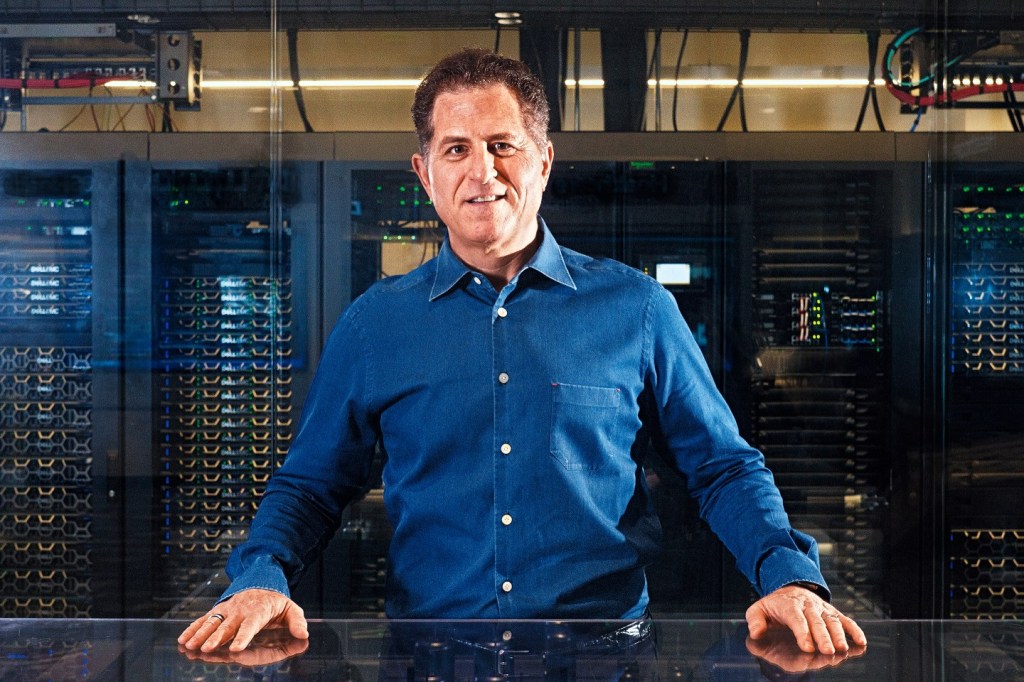
Recap of Dell Technologies’ Key Strengths and Areas for Potential Growth
Dell Technologies stands as a resilient player in the technology sector, demonstrating its adaptability and strength even amidst a challenging market landscape. Key strengths include:
- Diversified Business Model: Dell’s presence across various segments, including PCs, servers, storage, and cloud solutions, offers a degree of stability and resilience against fluctuations in specific markets.
- Operational Efficiency: A focus on cost control and operational efficiency enables Dell to maintain profitability even when facing revenue headwinds.
- Innovation Focus: Investments in cloud computing, AI, cybersecurity, and edge computing position Dell to capitalize on emerging trends and secure future growth opportunities.
- Commitment to Sustainability: Dell’s dedication to environmental sustainability and responsible business practices resonates with an increasing number of investors and customers.
- Shareholder Value: Consistent dividends and share repurchases reflect Dell’s commitment to returning value to shareholders.
Areas for potential growth include:
- PC Market Recovery: A rebound in the PC market could provide a significant boost to Dell’s top line.
- Successful Execution of Strategic Initiatives: The success of Dell’s initiatives in cloud computing, edge computing, and as-a-service offerings will be key drivers of future growth.
- Continued Innovation: Staying ahead of the curve in rapidly evolving technology areas will be crucial for Dell to maintain its competitive edge.
Consideration of Dell’s Place in Investment Portfolios
Based on its market strategies, innovation focus, and dividend track record, Dell presents a compelling investment proposition for those seeking:
- Growth Potential: Dell’s strategic initiatives and focus on emerging technologies offer potential for long-term capital appreciation.
- Income Generation: The company’s consistent dividend payouts provide a steady stream of income for investors.
- Value Investment: Current valuation metrics suggest that Dell’s stock might be attractively priced relative to its earnings and growth potential.
- Exposure to Technology Sector: Dell offers a way to gain exposure to the technology sector while maintaining a degree of diversification due to its multi-faceted business model.
However, potential investors should also consider:
- Market Volatility: The technology sector is prone to volatility, and Dell’s stock price could be impacted by broader market trends.
- Competition: Dell operates in a highly competitive landscape and must continue to innovate to maintain its market position.
- Economic Conditions: Macroeconomic factors, such as a global recession, could impact Dell’s financial performance.
Overall, Dell represents an attractive investment opportunity for those with a long-term investment horizon and a tolerance for market volatility. The company’s strong fundamentals, strategic focus, and commitment to shareholder value make it a compelling choice for investors seeking both growth and income in the technology sector.
X. Additional Insights
Alienware: A Game-Changing Addition
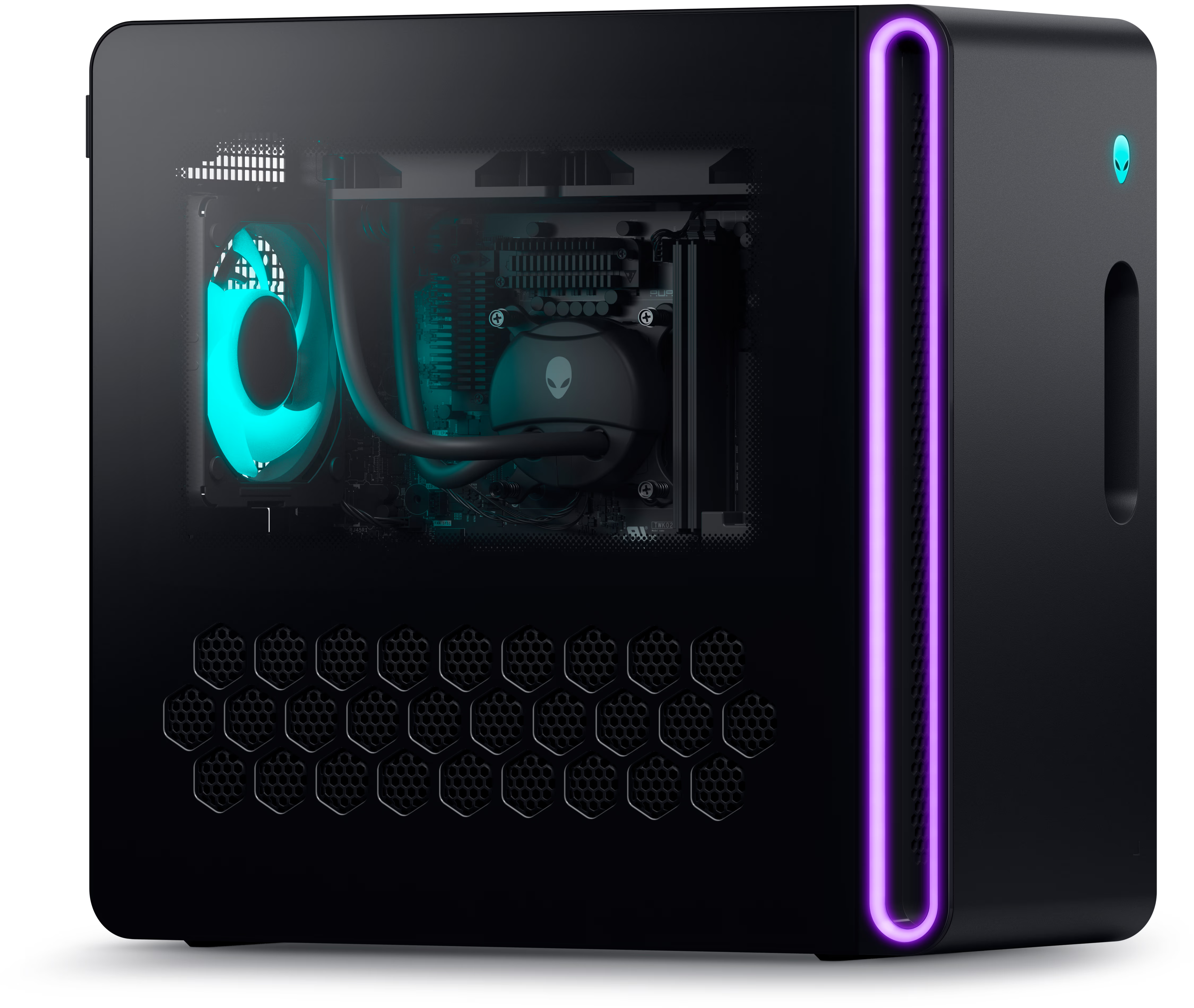
As Zachary Gedal, typing this from an Alienware desktop, I can personally attest to the power and versatility this brand brings to Dell. Initially, it took me some time to grasp the full extent of its capabilities compared to more conventional options. However, the performance, customization, and cutting-edge technology of Alienware are truly unmatched.
This powerhouse machine handles demanding tasks with ease, catering not just to gamers but also to professionals needing robust computing solutions. This strategic acquisition underscores Dell’s commitment to diversification and reinforces its position in the global tech industry.
Epilogue: Insights from Michael Dell’s Latest Book

In his latest book, Michael Dell offers an enlightening exploration of his journey through the realms of innovation and entrepreneurship. This publication not only details the strategic decisions behind Dell Technologies’ growth but also serves as a source of inspiration for navigating the complexities of the tech industry. The personal anecdotes and professional wisdom encapsulated in the book have profoundly influenced my investment perspective, providing a deeper understanding of the visionary leadership and bold innovation that continue to drive Dell Technologies forward. As we consider the potential inclusion of Dell in our portfolio, the insights gained from this book reinforce the company’s enduring value and potential for sustained growth. Michael Dell’s latest book offers a fascinating journey through innovation and entrepreneurship. His strategic insights and personal anecdotes have profoundly influenced my investment perspective. They underscore the visionary leadership and bold innovation driving Dell Technologies, reinforcing the company’s enduring value and growth potential.
Final Thoughts
Dell presents a compelling investment proposition for those seeking growth, income, and exposure to the technology sector. While acknowledging market volatility and competition, we believe Dell’s strong fundamentals, strategic focus,and commitment to shareholder value make it an attractive addition to a diversified portfolio.
Warm regards,
Zachary Gedal
